Stress is physical before it is understood
Stress often reaches the body before people recognize it as stress. It can show up as tension, headaches, fatigue, nausea, restlessness, or difficulty focusing, especially during the workday, when people move through meetings, deadlines, messages, and long hours of screen time without stopping to check in.
Prevention is already part of daily health behavior
People already use prevention to protect their health before a problem becomes harder to manage. They go to the dentist before tooth pain starts, wear sunscreen before skin damage appears, use earplugs before hearing damage becomes permanent, and track sleep before exhaustion turns into burnout. Stress belongs in the same category, but it is harder to catch because it builds quietly and often feels normal until it becomes physical.
The workday is the missing moment
Wearables like Oura help people understand recovery during rest, but they do not address the hours when stress is actively building. For knowledge workers, that usually happens while sitting at a screen, moving between calls, answering messages, and trying to stay focused. The opportunity was to design for that missing moment, before stress becomes something the user only notices later.
How the direction took shape
The final product came from pressure-testing the original brief against two research questions:
What can consumer EEG support in a daily-use product?
Consumer EEG can reveal broad cognitive pattern changes, but the experience needed to frame those changes carefully and use self-report to add context.
What form factor would people realistically adopt?
Eyewear carries strong personal constraints, including prescription, fit, comfort, and style, so the product needed a form that respected the frames users already wear.
These questions shaped the rest of the process, from the language of the check-in to the decision to move the product away from full smart glasses and toward modular EEG arms.
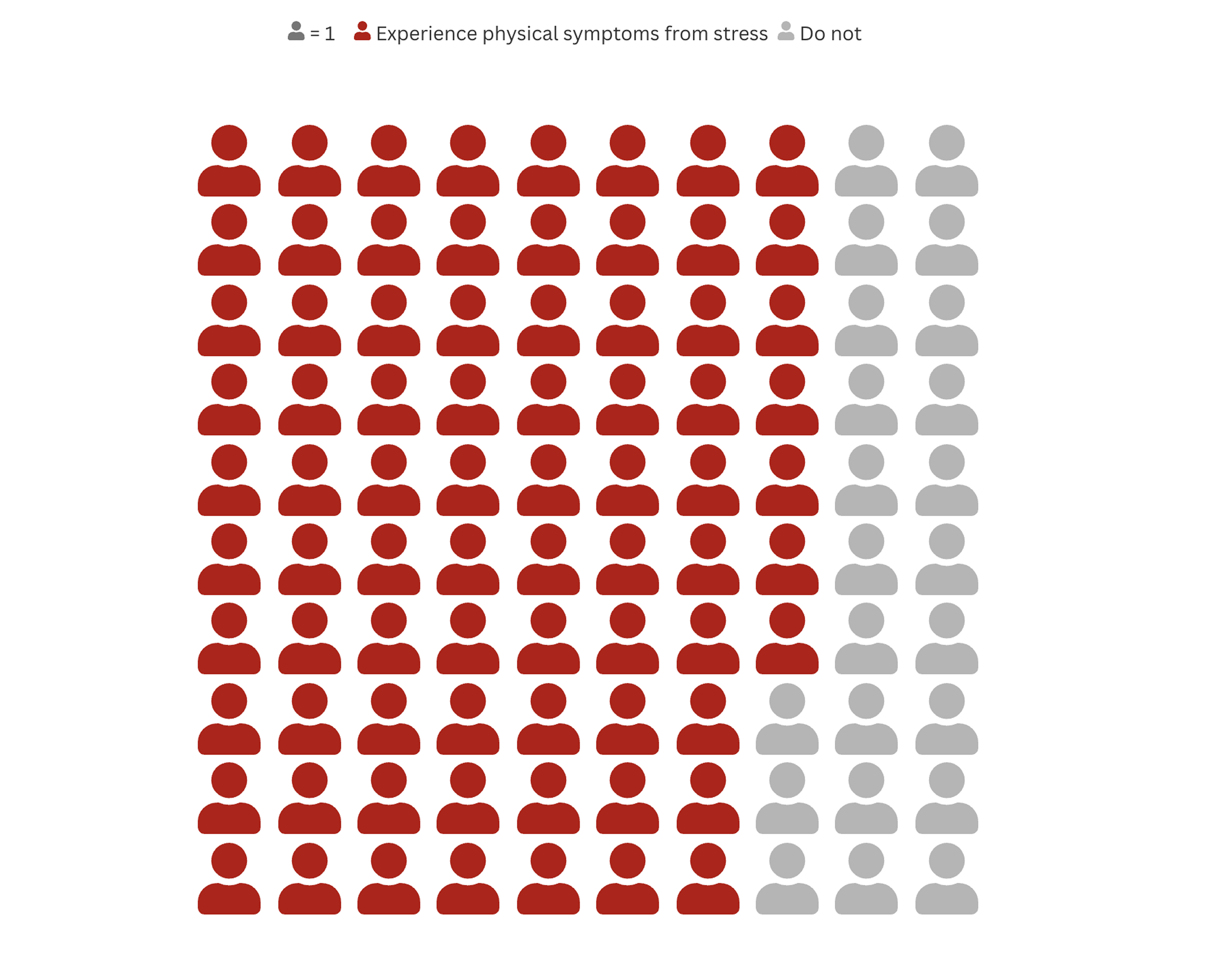
of people regularly experience physical symptoms caused by stress
3 in 4 adults carry stress physically every month before it is ever named, tracked, or addressed
Modular EEG glasses arms for workday stress check-ins
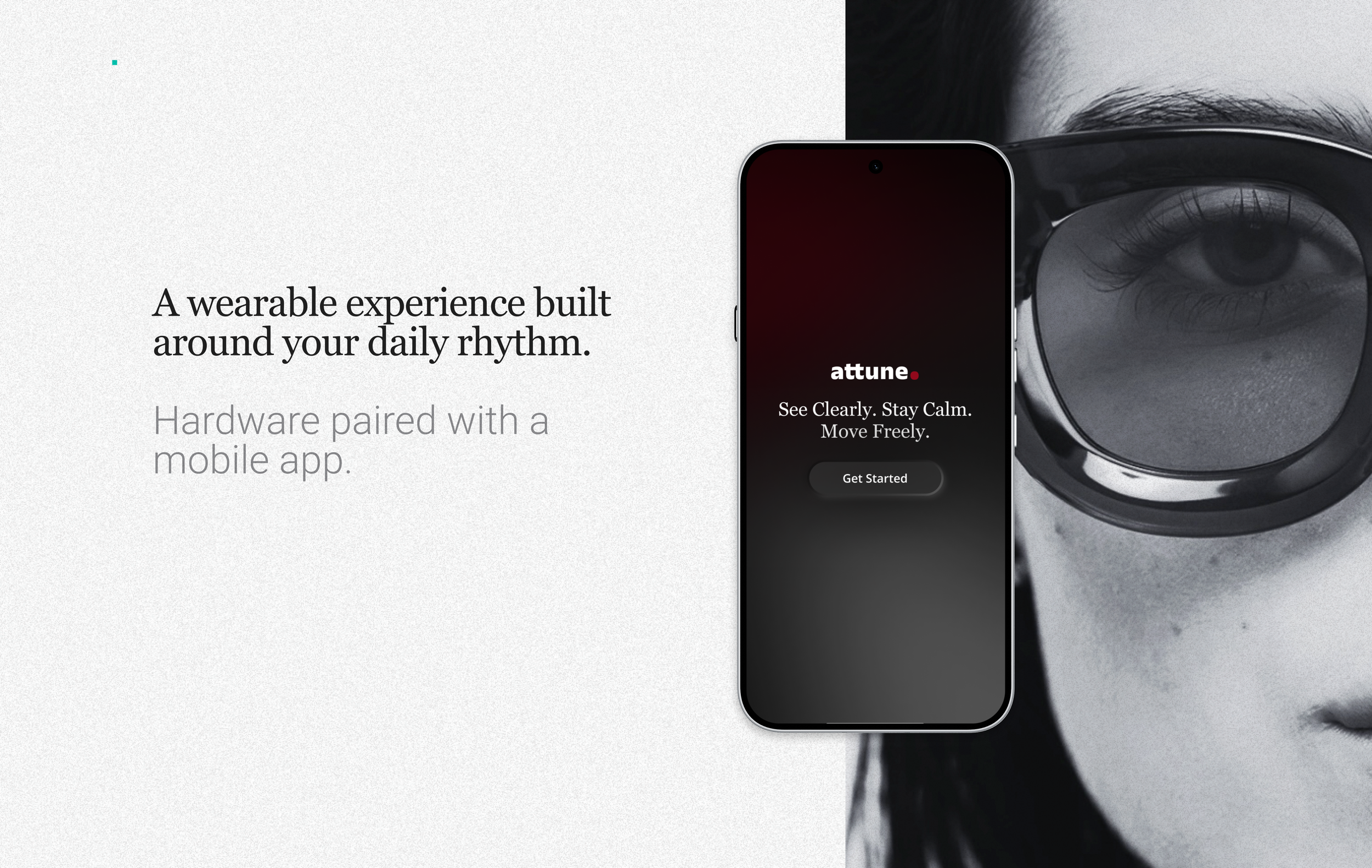
The final concept is a pair of modular glasses arms with integrated EEG sensors, designed to attach to the user’s existing frames. The arms track changes in the user’s cognitive pattern during the workday, then connect to a mobile app that turns those changes into short check-ins.
The system compares the user’s current signal against their established baseline, then prompts them to reflect on how they feel in that moment. The app gives the user a few simple response options, including a guided breath, a two-minute stretch, a feeling rating, or dismissing the prompt and continuing their work.
Over time, those check-ins build a clearer picture of the user’s workday rhythm, showing when cognitive load tends to rise, when focus tends to dip, and which small interventions the user responds to most. The EEG signal acts as a trigger for reflection, while the user’s response gives the system context.
The product opportunity
This project started with a simple question: what if a wearable could notice a change during the workday and ask the user to check in before stress becomes harder to interrupt?
The original concept was a pair of glasses with integrated EEG sensors, designed to monitor changes in cognitive state while someone works. The goal was to create a small moment of awareness during the part of the day when stress usually builds quietly in the background.
The concept also included blue light and UV filtering, which made sense at first because the product was already imagined as glasses and the target user spent long hours in front of a screen, but as the product direction developed, the bigger design question became less about adding more features and more about deciding what the product could credibly support.
77%
The lenses utilize trillions of molecules that recalibrate to light conditions, providing 100% protection against UVA and UVB rays. This automation creates a "Zero-Interaction UI" where the hardware handles environmental regulation.
❋ Adaptive Photochromics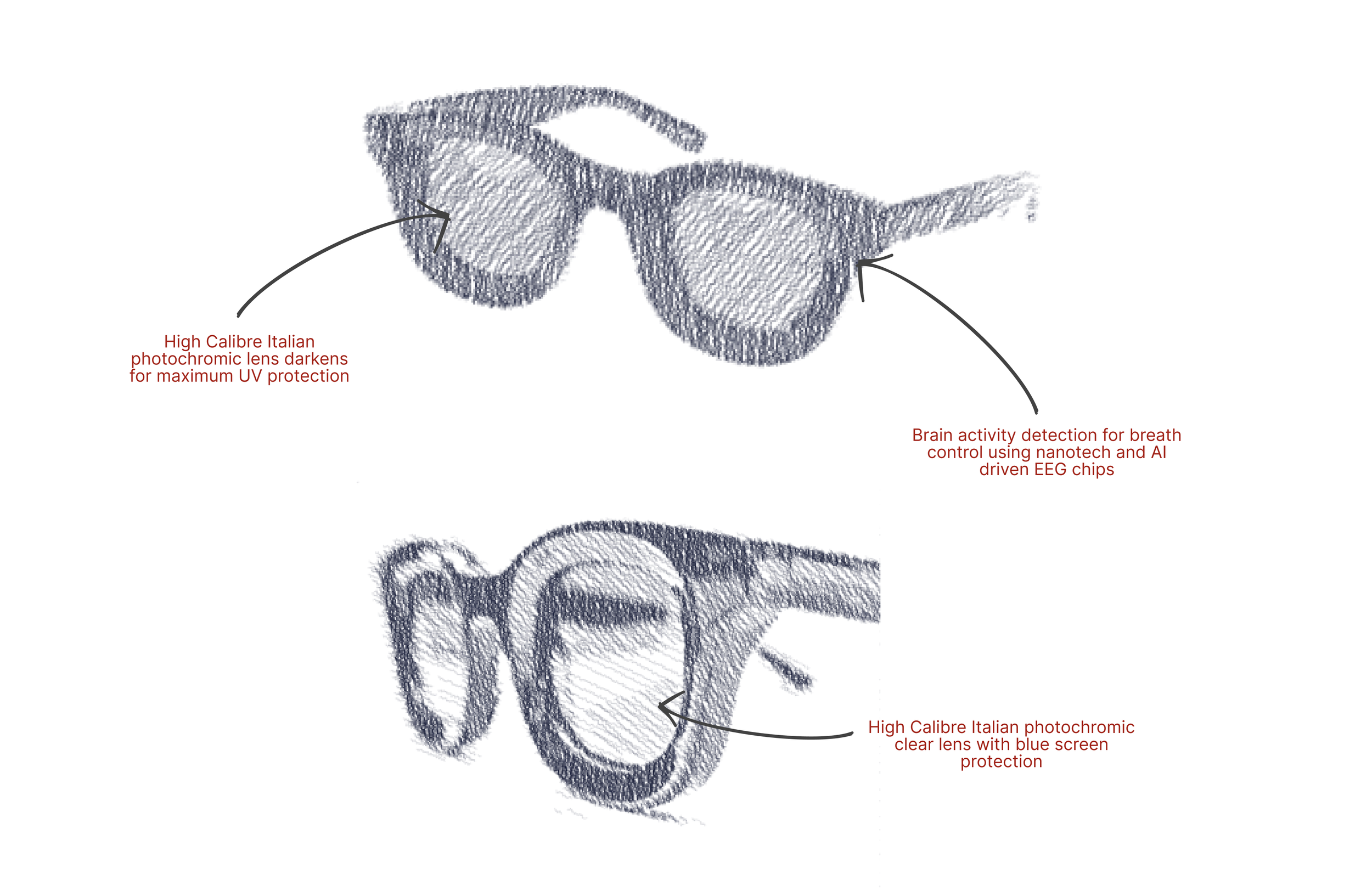
❋ Neurological SensingDry EEG sensors monitor Alpha (8–12 Hz) and Beta (13–30 Hz) waves to quantify mental workload in real time.
❋ The Sonic PaletteStarting with a sense of control
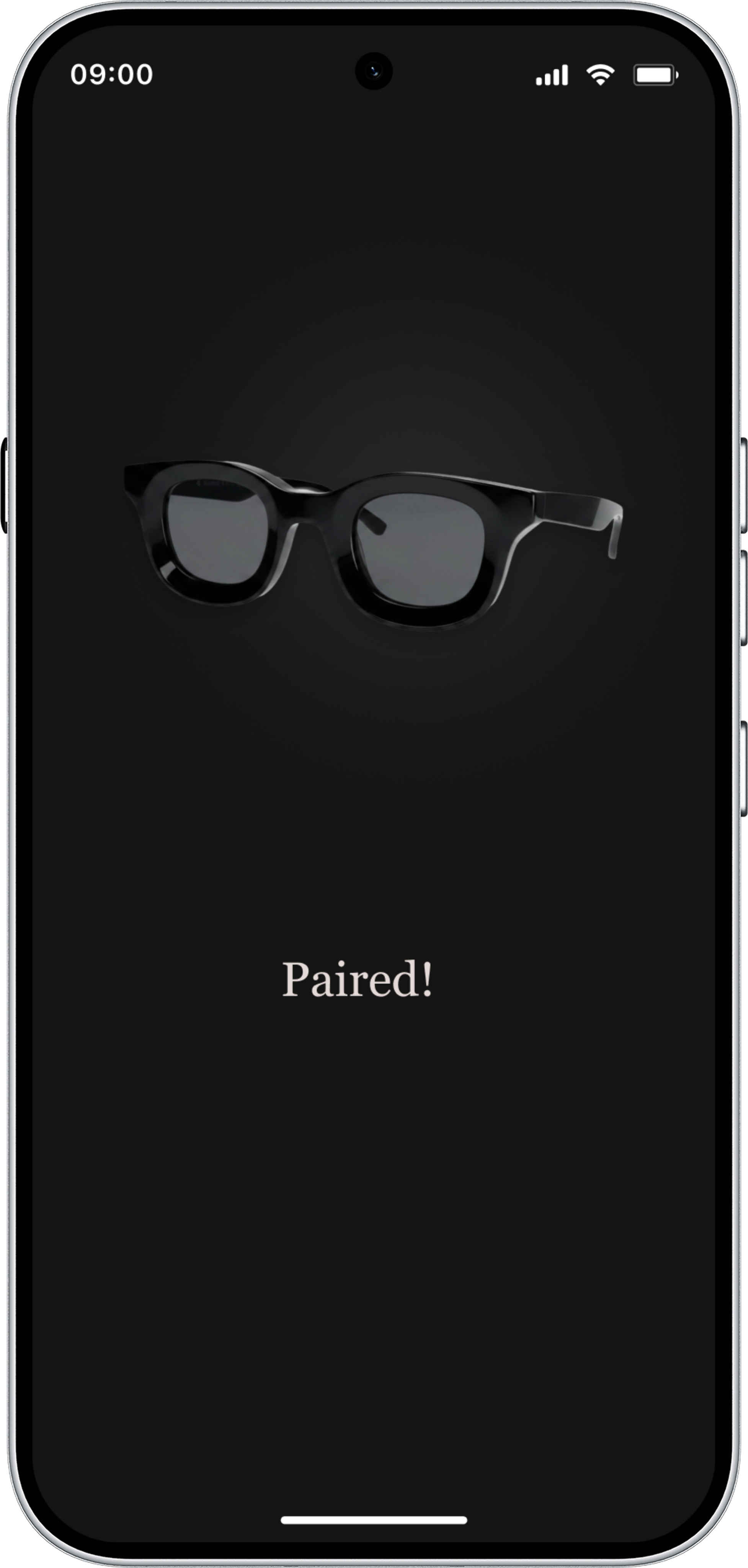
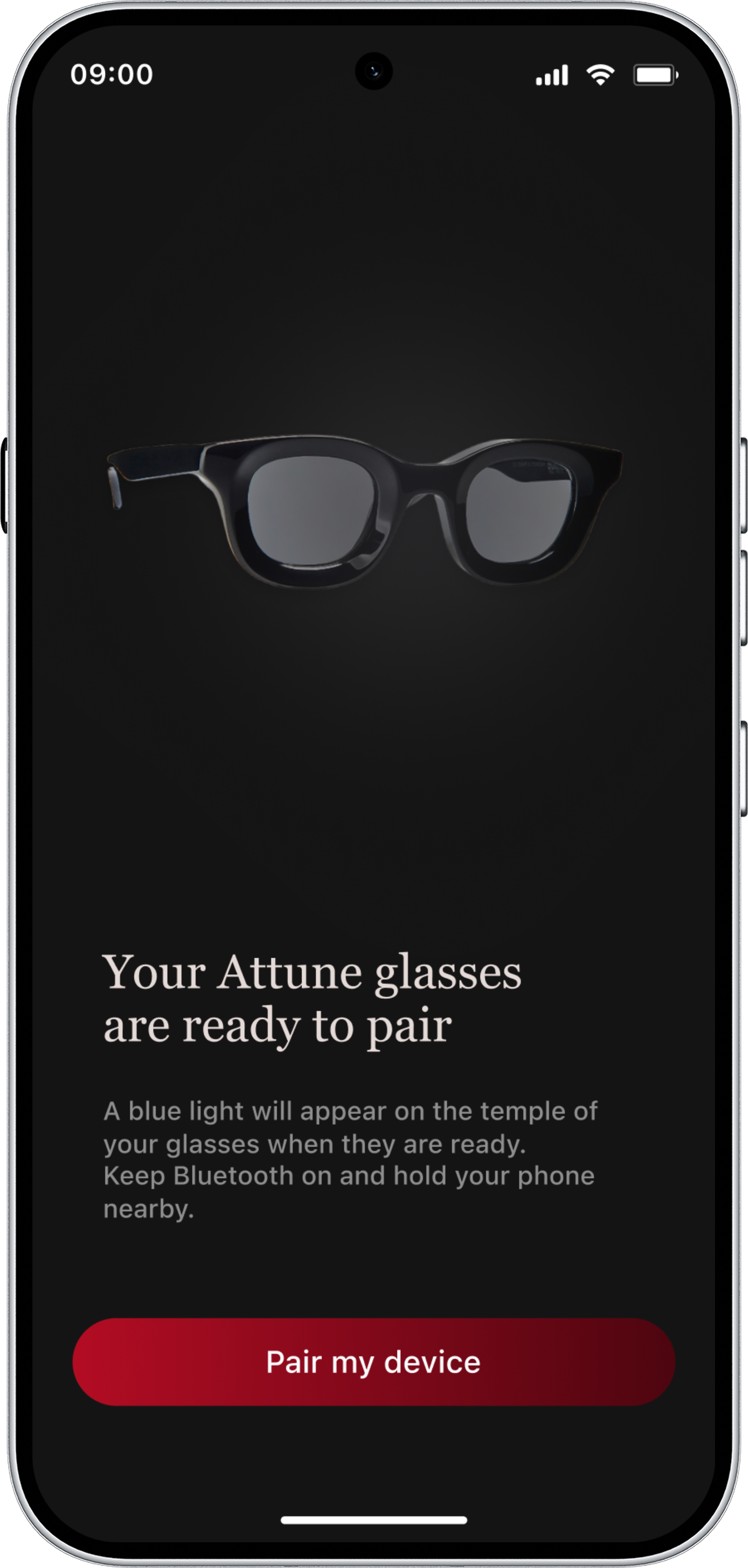
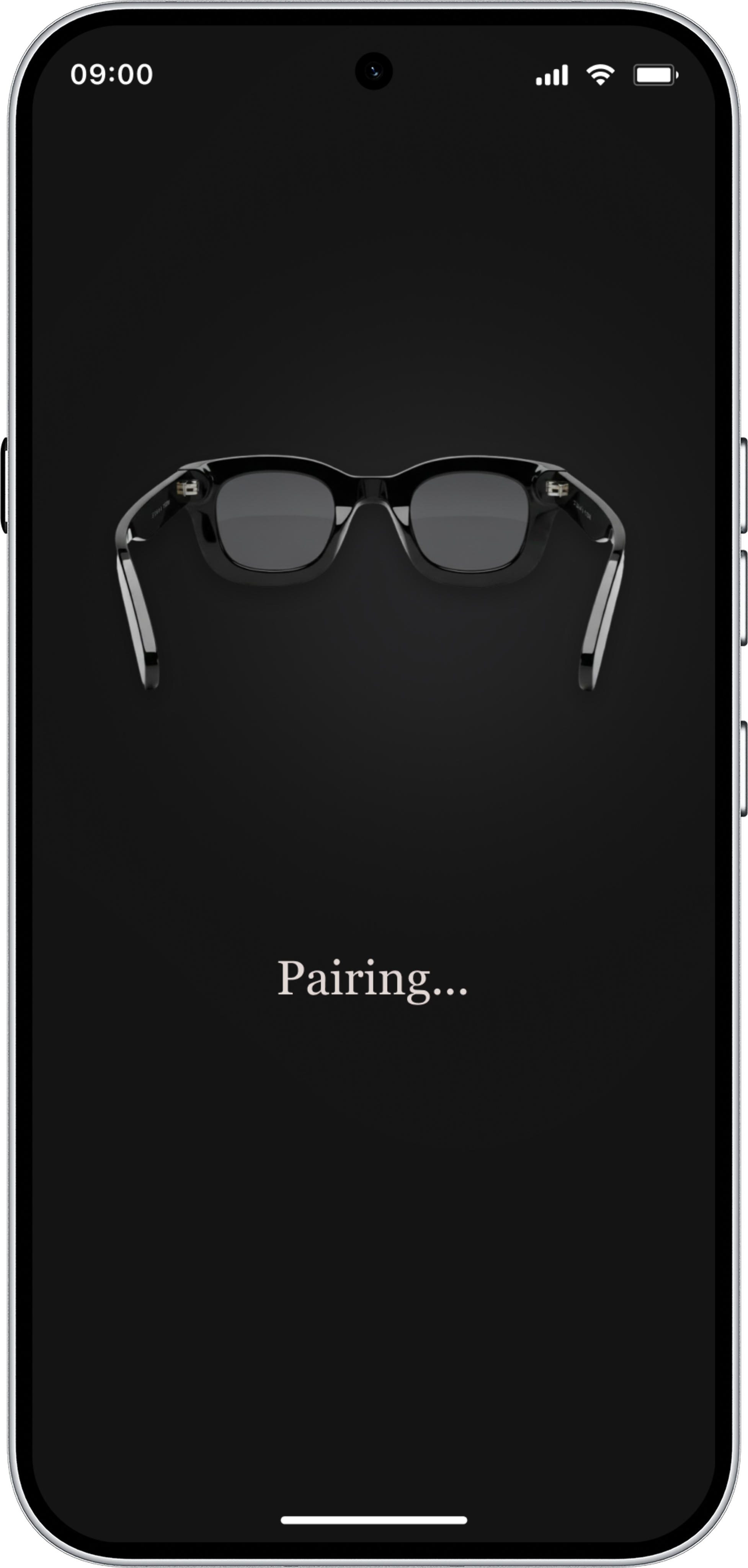
The pairing flow turns a technical setup step into a calm handoff between the glasses and the app. Keeping the product as the main focus builds trust in the device, while the short sequence, ready, pairing, paired, removes friction before the user enters breathing, calmness, and UV tracking.
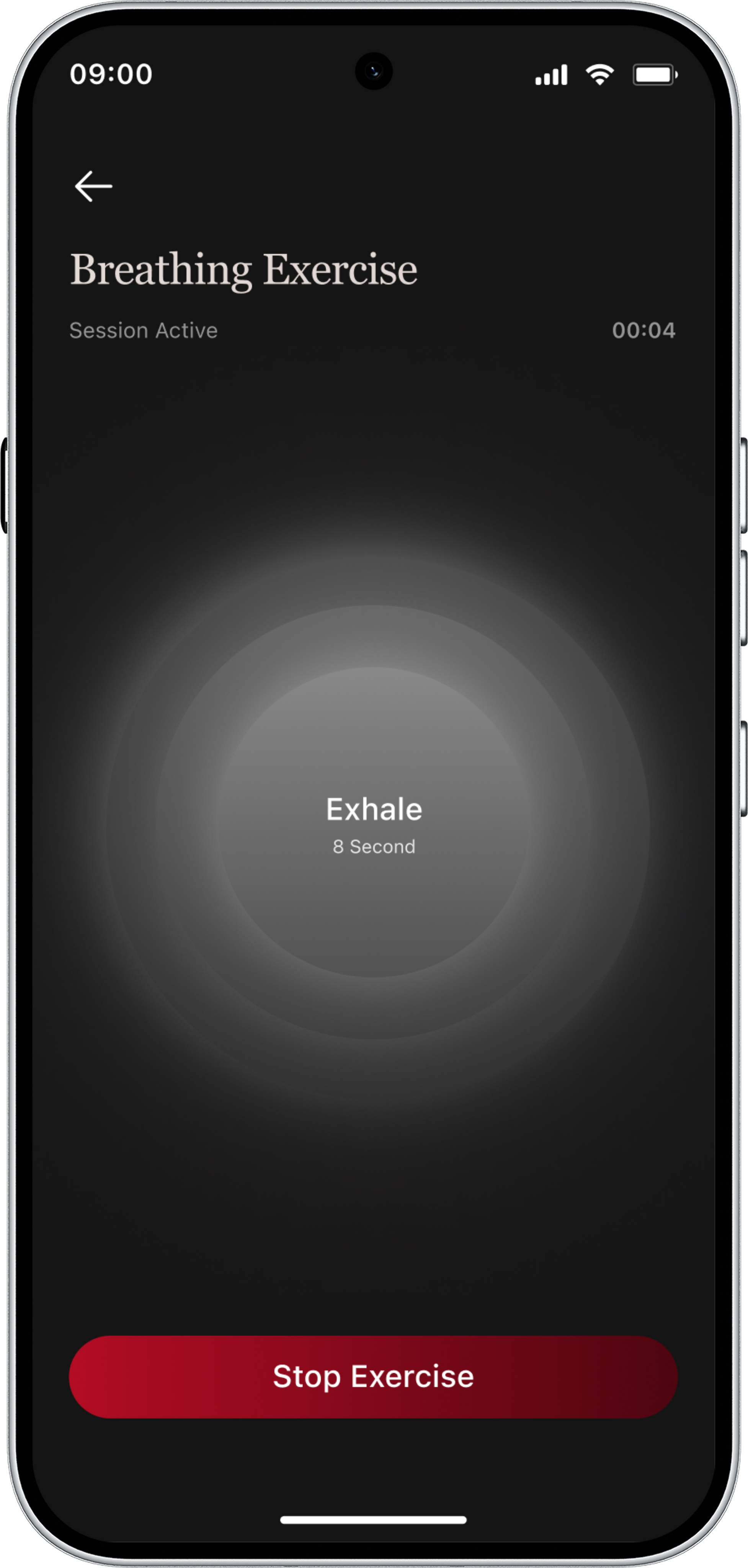
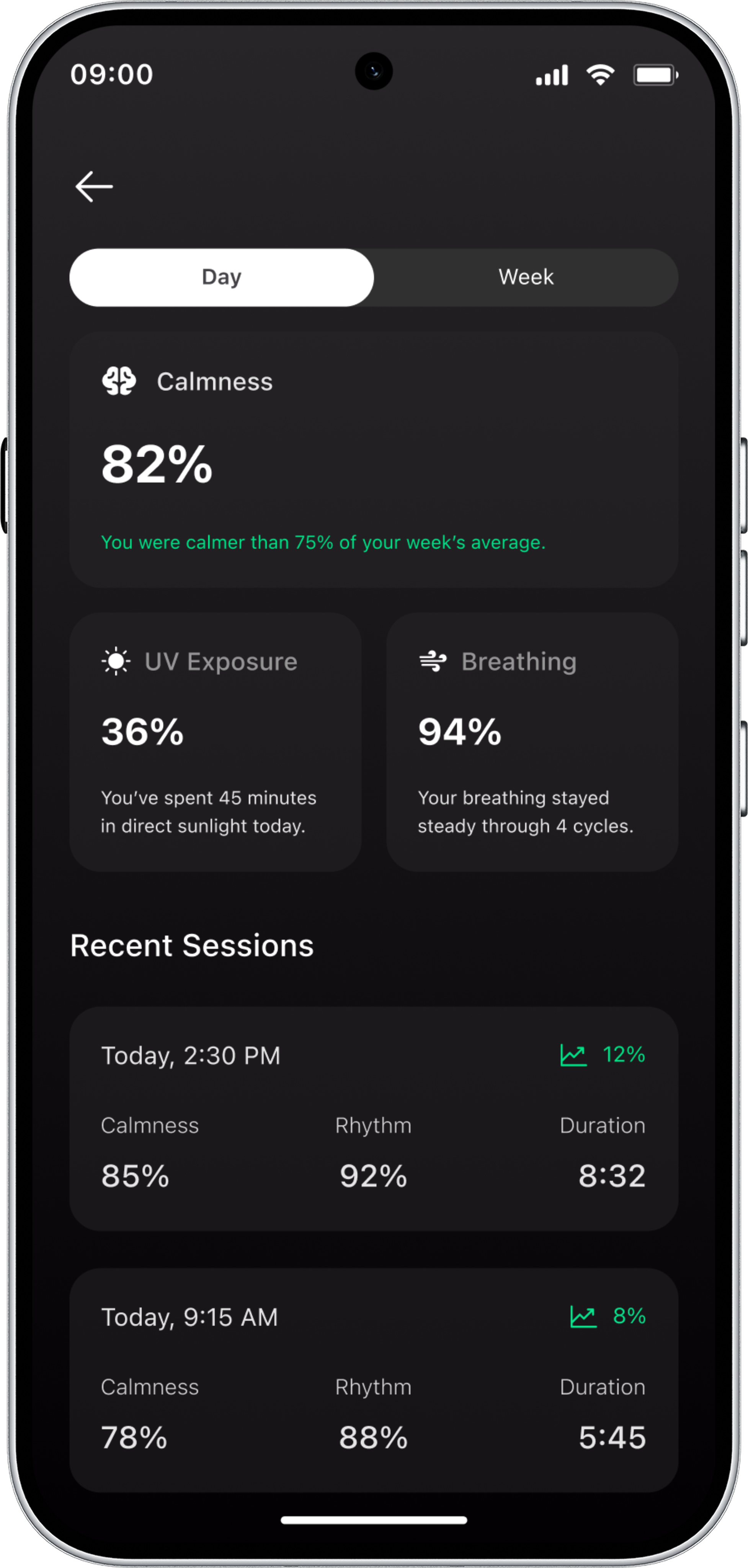
Metrics that turn patterns into context
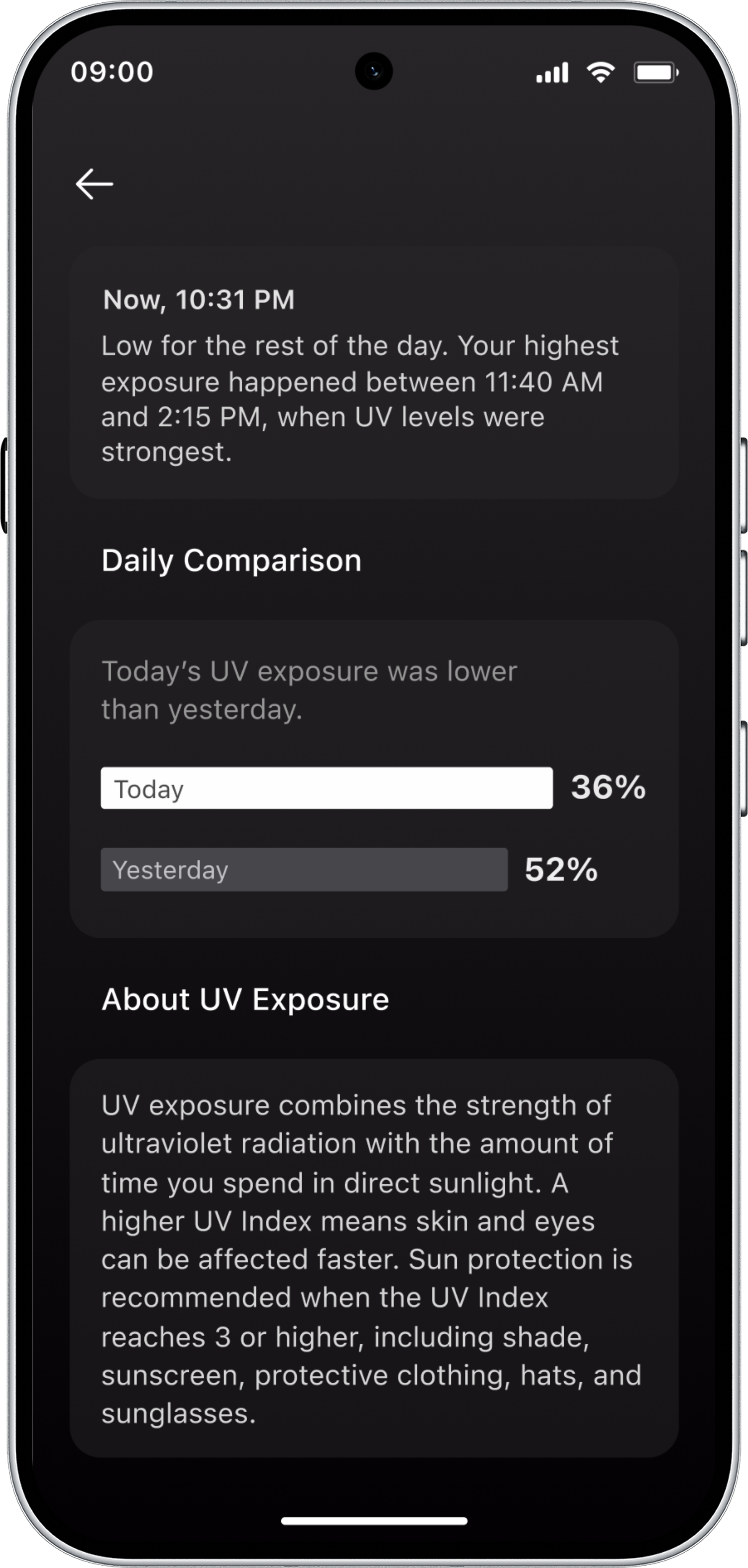
The experience brings together signals from the user and the environment, helping them understand how their state is changing in the moment. Calmness creates the main reference point by comparing the current reading to their usual pattern, while breathing gives them a direct way to respond. UV exposure adds outside context, connecting how the user feels with what is happening around them.
Audio cues utilize low-frequency hums that mirror the human breath cycle, ensuring repetitive tolerance and a cohesive "Family Affair" of sound.
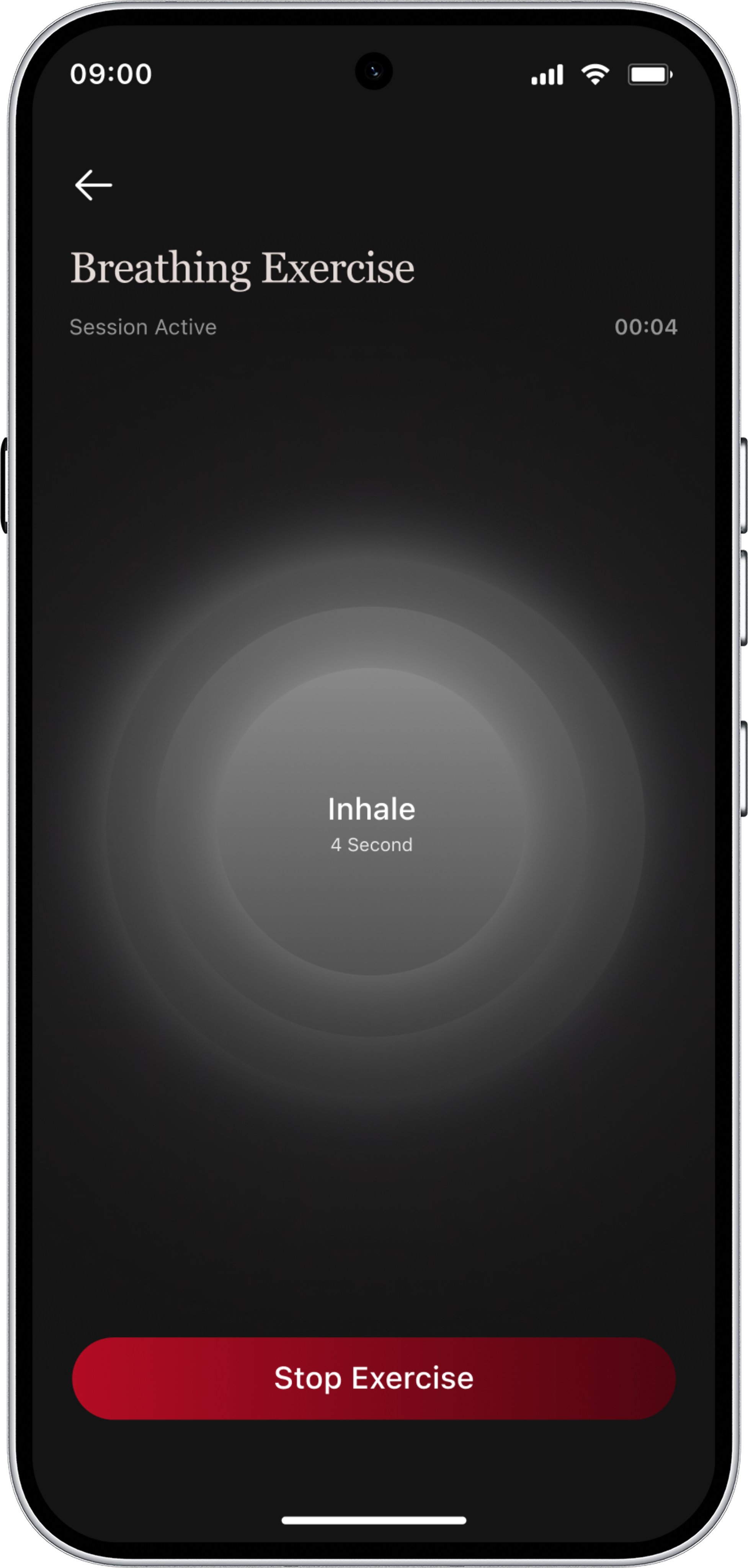
Making the breath easy to follow
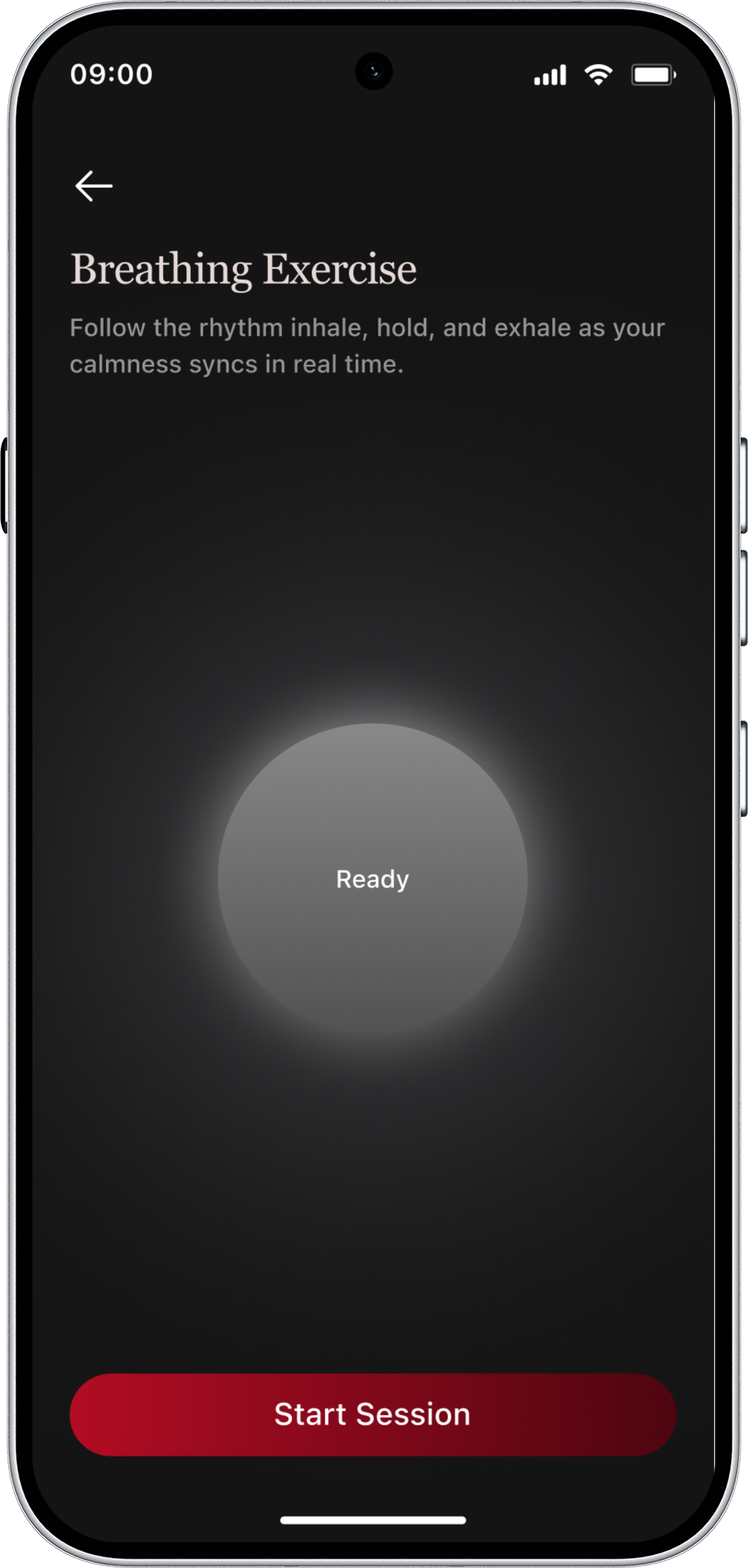
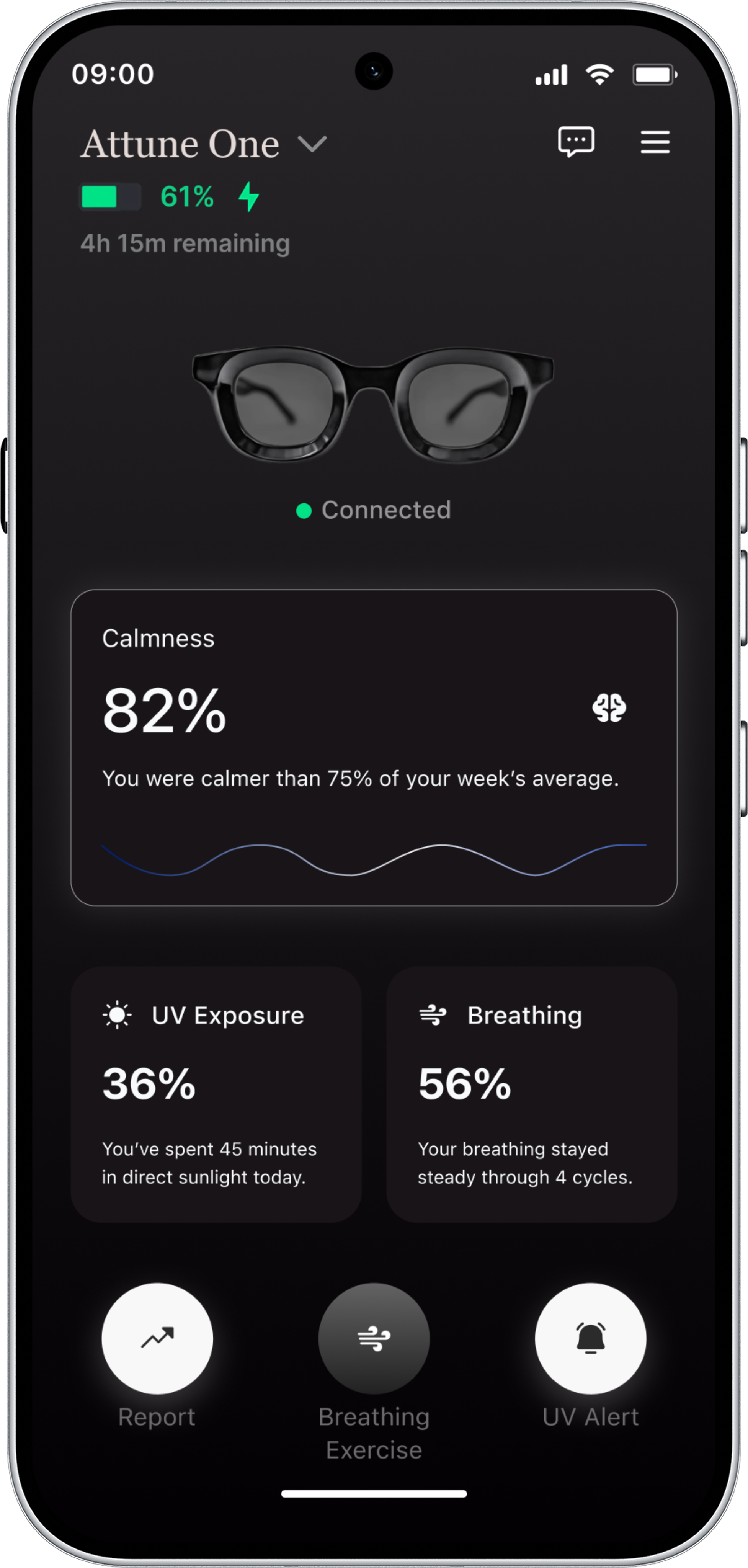
The breathing flow uses a single circular guide to help users follow each inhale and exhale without extra explanation. As the circle expands, the user breathes in. As it contracts, they breathe out. Keeping the timing, movement, and instruction in one focal point makes the session feel steady and easy to complete.
The product could not say, “you are stressed”
This became the most important UX constraint. If the product claimed to detect stress directly, it would sound more certain than the signal could support. That would create a trust problem, especially for a product dealing with the body and mental state. The better direction was to make the product behave less like an authority and more like a check-in.
Research challenge 01: signal and trust
A key question in this project was how confidently a consumer EEG product could speak to the user. Since the concept relied on dry EEG sensors, I looked at research comparing dry electrodes with standard gel electrodes.
In Signal Quality in Dry Electrode EEG and the Relation to Skin-electrode Contact Impedance Magnitude, Tautan et al. compared dry and gel electrodes using correlation and signal-to-noise ratio as signal quality measures. Their results showed that dry electrodes had larger impedance variation and lower signal quality than gel electrodes overall, while gel electrodes maintained stronger performance across more conditions. The paper also explains that dry electrodes can be more vulnerable to noise and interference because they rely on stable skin contact without conductive gel.
The research helped define a practical boundary for the product: the EEG signal could support noticing a change in the user’s pattern, but the interface needed to describe that change without sounding medically certain.
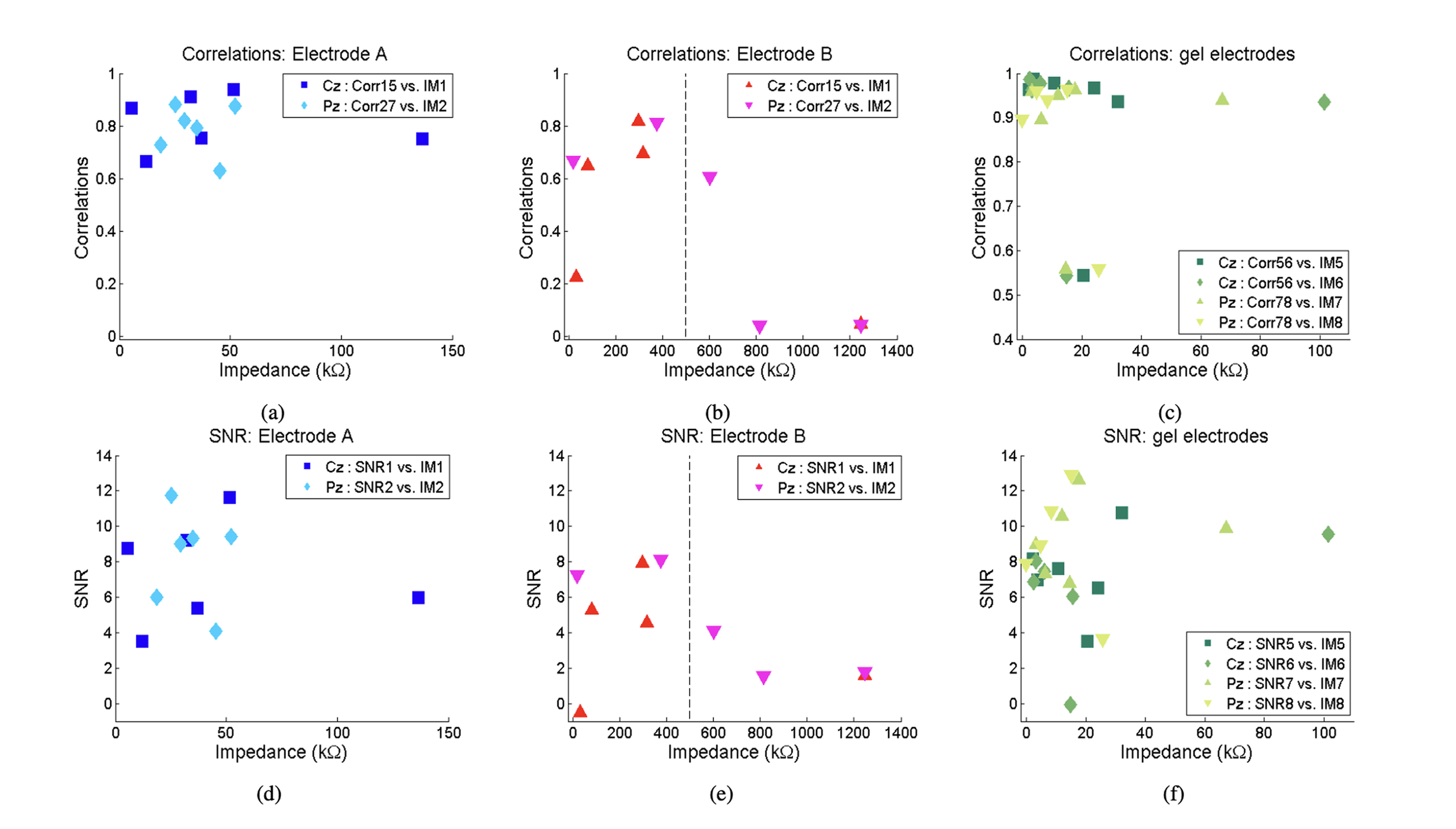
Dry EEG can support useful pattern recognition, but signal quality changes with electrode type, contact, and recording conditions. This made “pattern shift” a more credible product claim than “stress detected.”
Research challenge 02: form factor and adoption
The second research question was about the object itself. The original concept assumed a full pair of glasses, including the frame, lenses, and arms, but eyewear carries a higher adoption burden than many other wearables because it sits on the face and becomes part of how a person looks every day.
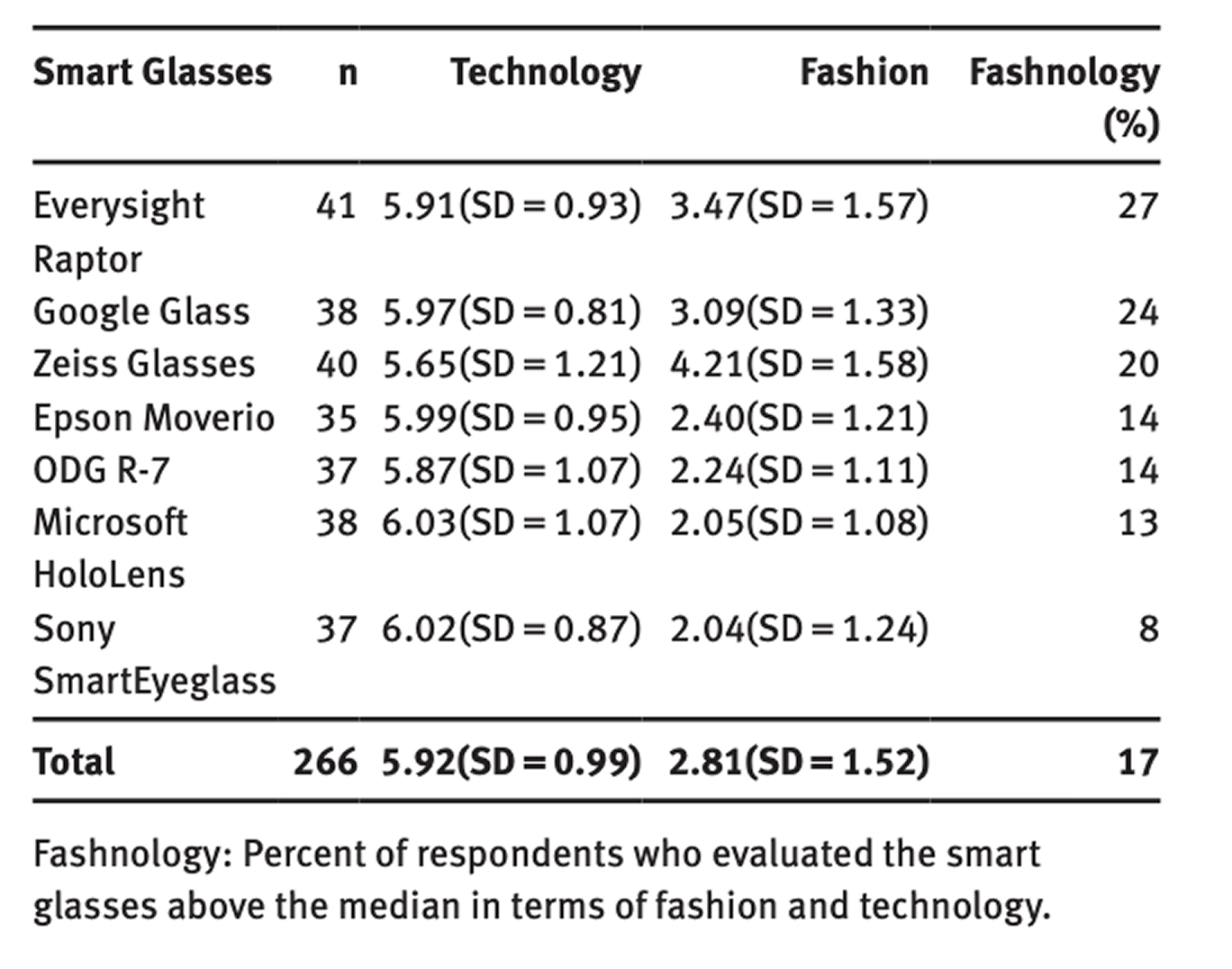
Research on smart glasses made that adoption risk clearer. In a study of seven smart glasses models, Rauschnabel et al. found that people rated the devices similarly as technology, but very differently as fashion. Technology ratings stayed close together, while fashion ratings ranged from 2.04 to 4.21 on a 7-point scale, depending on the model.
For this project, the frame could not be treated like a neutral container for sensors. A full glasses replacement would ask users to accept a new style, fit, and possibly prescription setup before they ever experienced the stress check-in value. The clearer direction was to move the technology into the arms, where the sensors, processor, and Bluetooth module could support the core function while the user kept the frames they already chose.
Reframing the product
The project shifted from stress detection to pattern-based check-ins. That change made the product more credible because the system only needed to identify a meaningful deviation from the user’s baseline, then invite the user to reflect. This reframing also changed the user relationship. The product became a support layer during the workday, while the user stayed responsible for naming their own state. The system surfaced moments the user might ignore, and the check-in gave those moments context.
Design decision: modular arms
The original concept placed the full experience inside a complete pair of smart glasses: frame, lenses, arms, EEG sensors, blue light filtering, UV protection, and the companion app. That made the product feel heavier than the actual user need. The core value was the ability to notice a cognitive pattern shift during work and turn it into a check-in, but the product was asking users to replace the entire object they wear on their face every day.
Glasses are personal. The frame carries prescription, fit, comfort, face shape, and style. Replacing that frame would create friction before the user ever reached the value of the product. The lenses also made the concept less focused. Blue light and UV filtering fit the glasses format, but they were secondary to the real behavior the product needed to support: workday stress awareness through EEG-based check-ins.
The cleaner direction was to move the technology into the arms. The sensors, processor, and Bluetooth module could live there, while the user kept the frames they already chose. This made the product smaller in scope and clearer in purpose: the frame stays personal, the arms become the sensing layer, and the app turns signal changes into reflection and rhythm insights.
Reflection
Stress behaves like a cumulative process. It builds through repeated demands, small interruptions, unresolved tasks, and long periods of focused attention. Designing for that kind of experience required a product that could respond to patterns over time, rather than treating stress as a single event.
The EEG signal gave the system a starting point, while self-report gave that signal meaning. A change in the user’s baseline could begin the interaction, but the user’s response created the context needed to understand it. This made the app feel closer to a behavioral check-in than a biometric verdict.
Over time, each prompt became part of a larger record of the user’s working rhythm. The product could show when cognitive load tended to rise, when focus became harder to maintain, and which small interventions helped the user return to a steadier state.
The larger design lesson was about restraint. Biometric products earn trust when they show the boundary between signal and interpretation. In this concept, the value came from helping users notice what their body had already started to register, while giving them enough agency to name the experience for themselves.